


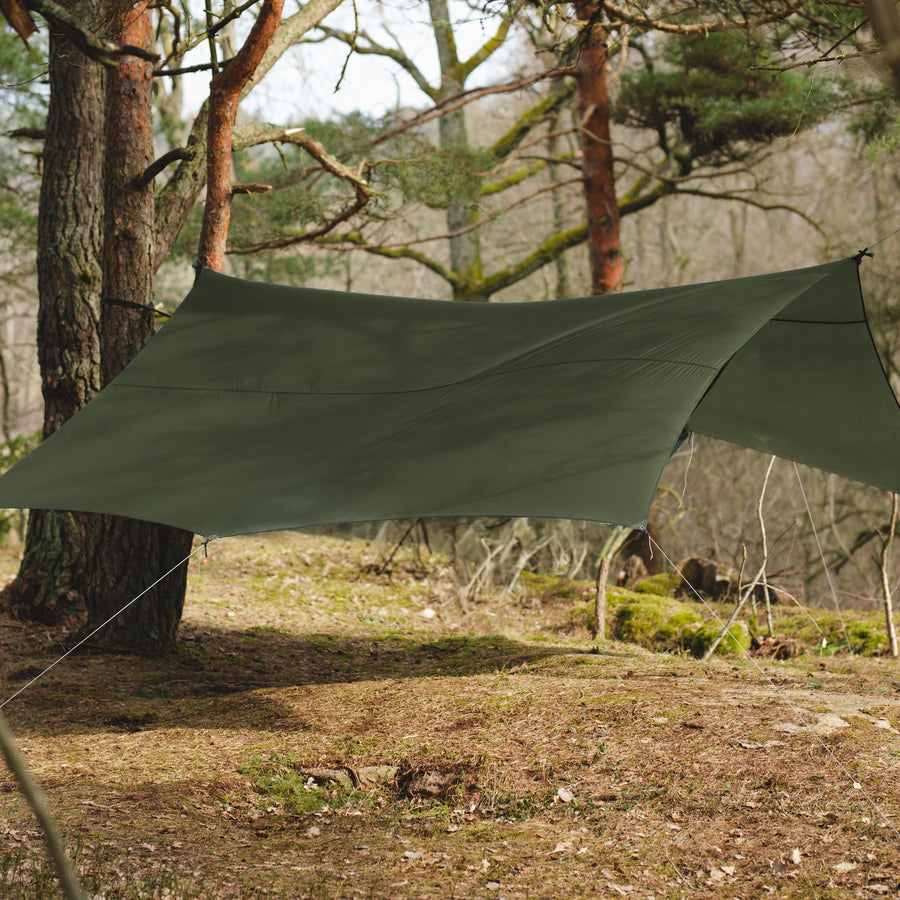

Slopes
In a tent: You slide into the corner all night and wake up wedged against the wall.
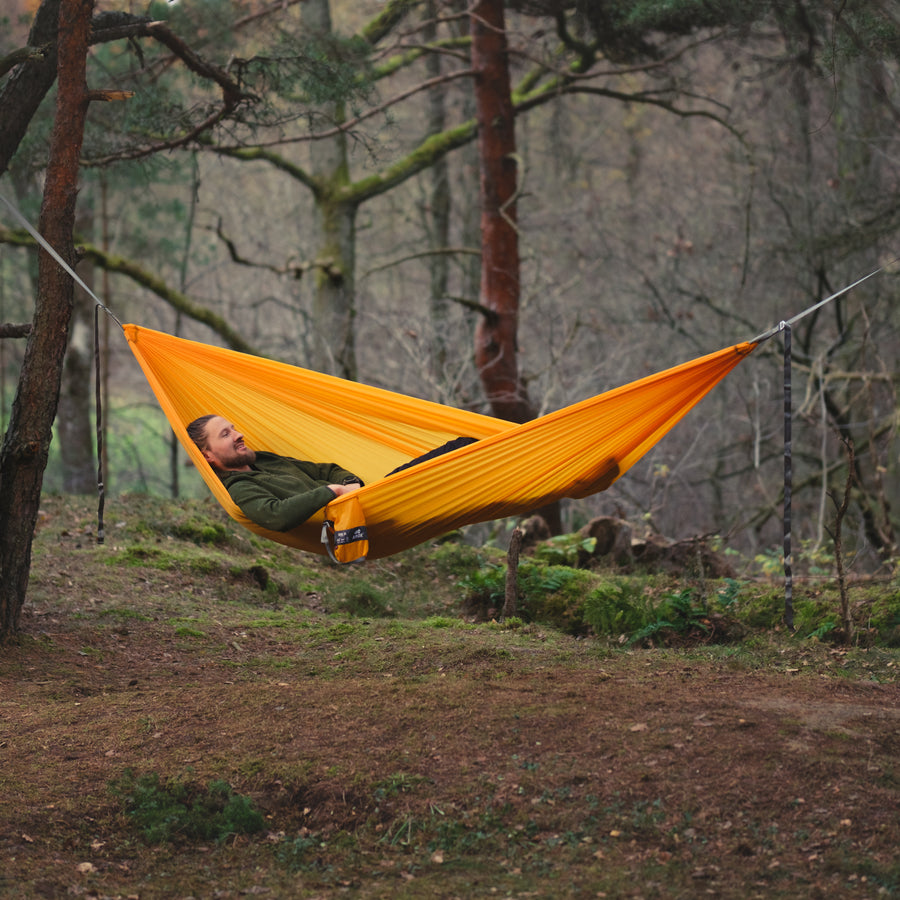
In a Draumr: The hang stays level, however steep the ground beneath it.
Draumr Hammock vs. tent
Slopes, roots, rocks, bog, snow. A tent needs flat, dry ground. A Draumr needs two trees.
Freedom to choose your spot
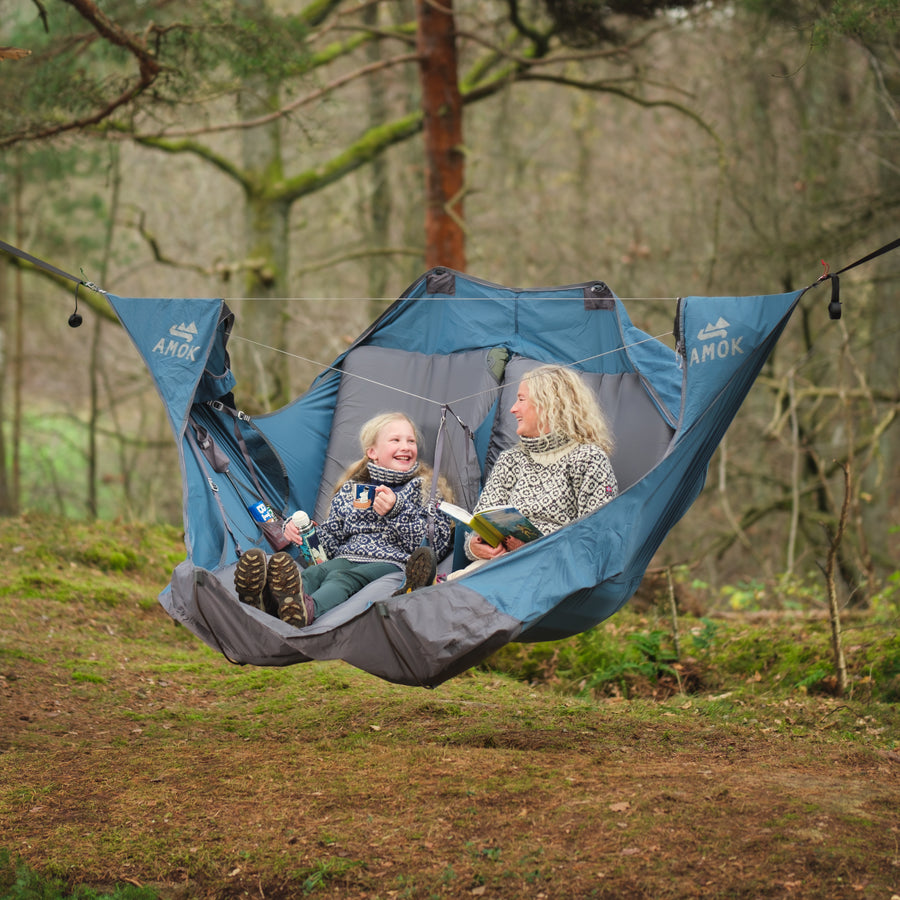
Draumr gives you the same flat, comfortable bed wherever you hang it – on a slope, over roots or above soggy ground. The ground just stops mattering.
In a tent: You slide into the corner all night and wake up wedged against the wall.
In a Draumr: The hang stays level, however steep the ground beneath it.
In a tent: You find them with your back at 2 a.m., straight through the pad.
In a Draumr: Nothing beneath you but air.
In a tent: Rain pools under the floor and the damp creeps in.
In a Draumr: You sleep above the puddles, not in them.
In a tent: Dig a platform first, then melt a hollow into it overnight.
In a Draumr: Hang above the snow. Add insulation underneath and stay warm.
In a tent: Dense forest means no flat spot, which means no camp.
In a Draumr: Any two trees the right distance apart become a campsite.
In a tent: Ants, slugs and ticks share the ground with you.
In a Draumr: Off the ground and away from what lives on it.
Not just about terrain
Two straps and a tarp. No poles, no pegs, no hunting for flat ground. [Setup time: X min]
Air moves around you instead of getting trapped in a closed tent.
No flattened vegetation, no trenching. Wide tree straps protect the bark.
[Draumr converts into a chair, so your bed becomes the best seat at camp.]
Fall asleep looking at the stars. Pitch the tarp only when the weather turns.
Hang where the view is: at the forest edge, above the lake, facing the valley. Wake up to the landscape, not a tent wall.
Hammock, straps and tarp replace tent, footprint and poles. [Full system: X g]
The Draumr difference
The reason many people avoid hammocks is the curve. Draumr is built to hang flat, so you sleep the way you do at home – on your back or on your side.
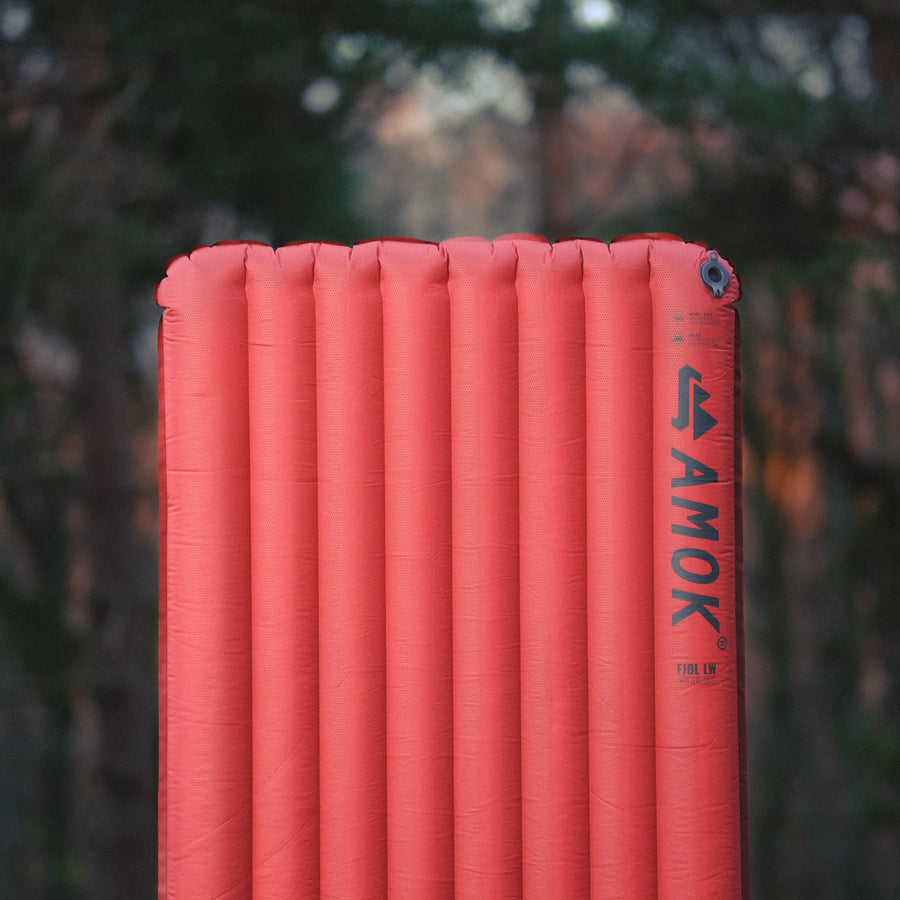
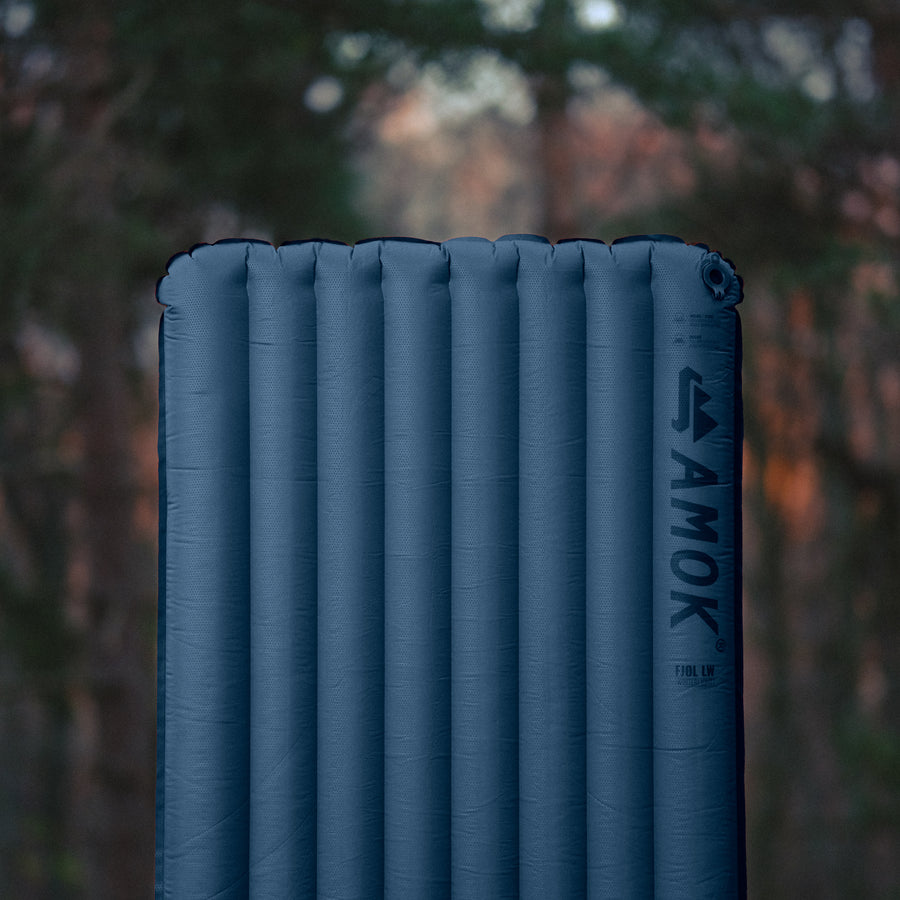
Sleeping pad + Draumr = bed
In a tent, your sleeping pad stops the cold ground from pulling heat out of your body. In a Draumr it does exactly the same against the cool air underneath you.
But here the pad does one more job. Combined with the way Draumr is shaped and tensioned, it becomes the base of a proper bed: flat, spacious and insulated – sleep quality that can rival your bed at home.
| Tent vs. Draumr, side by side | Tent | Draumr hammock |
|---|---|---|
| Needs | Flat, dry, clear ground | Two trees [X–Y m] apart |
| Slopes & rocks | Move camp or sleep badly | Doesn’t matter |
| Wet ground | Floor can leak or get soaked | You’re above it |
| Insulation | Sleeping pad on the ground | Sleeping pad inside the hammock |
| Setup | Poles, pegs, guylines | Straps and tarp |
| Warm nights | Stuffy and humid | Airflow all around |
| Daytime use | Shelter only | [Chair and lounger] |
| Above the tree line | Works | Needs anchor points |
The honest bit: above the tree line, on bare mountain or open tundra, a tent still wins. A hammock needs two anchor points. Below the trees, it beats the tent almost everywhere.
Find a spot nobody else can use, and sleep better than you do in a tent.
[Warranty: X years] · [Free returns, XX days]